Website Redesign Lisbon: Web Design That Converts

Website redesign Lisbon should improve clarity and leads. Combine web design Lisbon, website development and SEO Lisbon so you do not lose organic traffic.

R5 Studio Team
R5 Studio Team
Product Design & Development Studio in Lisbon
calender-image
August 5, 2026
clock-image
10 min read
Website redesign in Lisbon based on user journeys and conversion data

Website redesign Lisbon starts with a diagnosis

A website redesign Lisbon project is often triggered by an outdated appearance, but appearance may be only one symptom. The deeper issues can include vague positioning, duplicated pages, poor mobile navigation, slow forms, missing proof, difficult content editing or a technical setup that blocks growth. Replacing colours and typography without diagnosing those problems can produce a newer version of the same weak journey.

Define the conversion and the current baseline

Conversion means different things for different businesses. A clinic may measure completed appointment requests, a restaurant direct bookings, a B2B service qualified enquiries, and a startup demo requests or sign-ups. Select one primary action for each important page and record the current numbers where data exists. Review analytics, Search Console, CRM records, form completion, support questions and sales feedback.

Quantitative data shows where people leave; qualitative evidence explains why. Interview staff who speak to customers, read repeated enquiries and observe several users trying to complete a task. A low form completion rate may result from too many fields, unclear privacy wording, a technical error or simply an offer that does not justify the request.

Audit content and search value before removing pages

List all current URLs with traffic, queries, backlinks, leads and business relevance. Some pages may look visually old but still attract valuable search demand. Others may be thin, duplicated or no longer accurate. The redesign plan should state which pages are retained, merged, rewritten or removed and where each old URL redirects.

Do not send every removed page to the homepage. Redirect it to the closest useful replacement. Preserve strong titles, useful sections and internal links where they continue to serve the visitor. A redesign can improve structure without discarding accumulated search equity.

R5 Studio’s relevant capabilities are described on the UI/UX, web development and SEO services page. The project portfolio shows how visual and product decisions can vary by business context.

Before-and-after website interface with improved mobile conversion flow

How a website redesign in Lisbon moves from evidence to production

Prioritise the journeys with the highest business value

Not every page deserves equal redesign effort. Start with entry pages that receive meaningful traffic, service pages that influence revenue and steps where users abandon. Use a simple matrix: business impact, user frequency, severity and implementation effort. A broken mobile booking step should rank above a cosmetic inconsistency on a low-traffic article.

Rewrite the information architecture around customer questions. Reduce competing calls to action. Put proof close to claims and forms. Separate services that have distinct audiences or search intent. The redesign should make the path easier to explain to a new employee as well as to a customer.

Prototype content and behaviour before high-fidelity design

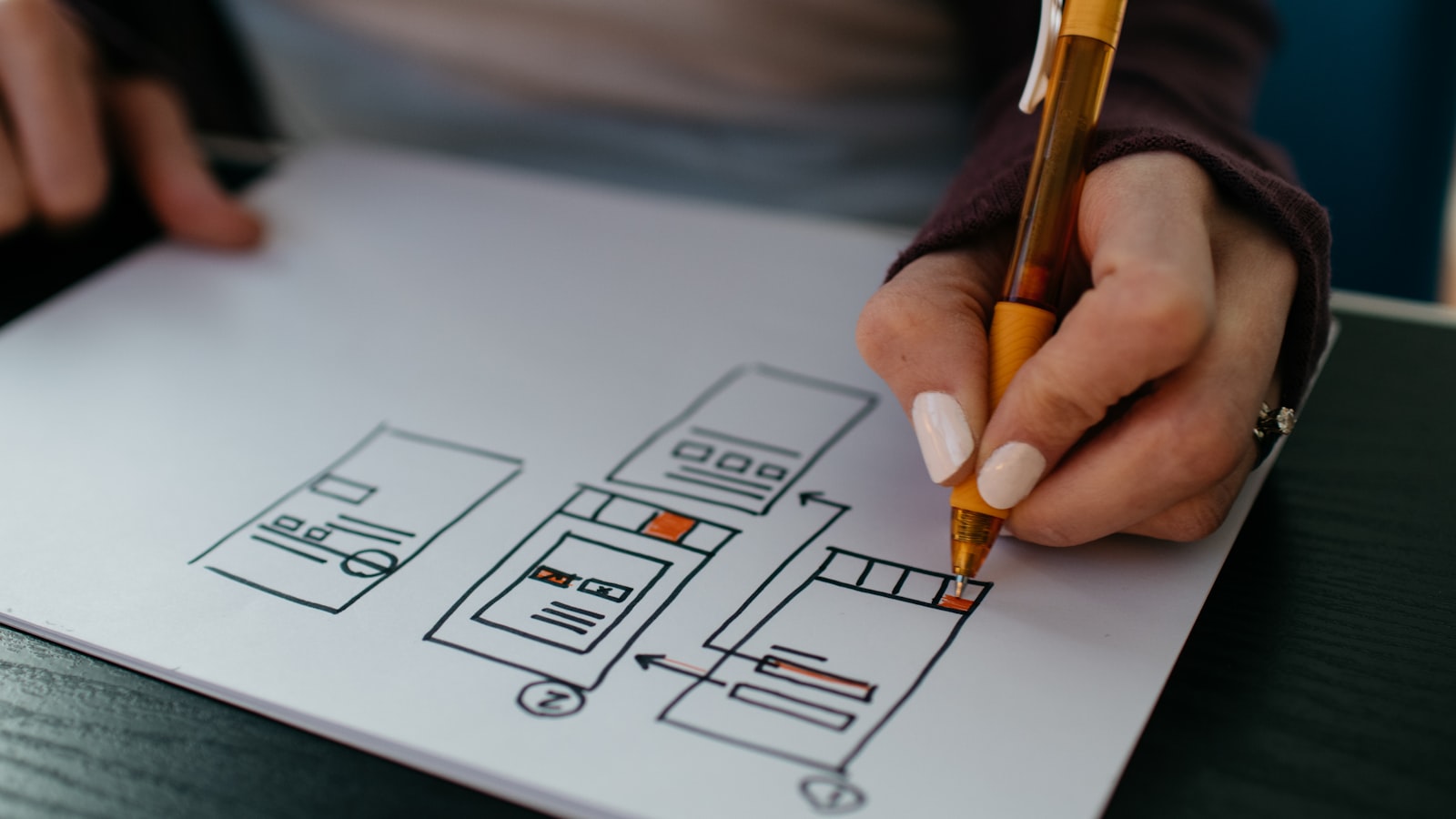
Wireframes allow teams to test hierarchy without debating colours. Use realistic copy, Portuguese and English variants where required, real testimonials and actual service names. Prototype critical paths such as booking, quote request, product demo and mobile navigation. Include error, confirmation, loading and empty states.

The visual phase should create reusable components rather than isolated page art. A component system keeps new pages consistent and reduces future development time. It should specify typography, spacing, imagery, buttons, forms, cards, navigation and responsive rules. Accessibility and performance constraints are design inputs, not final technical corrections.

Protect production quality

A redesign loses value if development does not preserve hierarchy, spacing and behaviour. Provide staging access early and schedule joint design-development reviews. Test actual content, long translations, different image ratios and slow connections. Verify forms, email, booking, CRM, analytics and consent settings end to end.

Before launch, crawl the staging site, map redirects, check canonical tags, update the XML sitemap and verify that language versions point to the correct equivalents. The detailed production workflow is covered in From Figma to Production.

"A redesign is successful when it removes measurable friction and preserves useful assets—not when every page merely looks different."

Measuring a website redesign Lisbon result after launch

Separate launch health from business performance

In the first days, confirm that pages are indexable, redirects work, forms reach the correct destination, analytics events fire and no major mobile or browser errors appear. These are launch health checks. Business performance requires a longer comparison period and enough traffic to interpret changes responsibly.

Compare similar periods and segment by channel, device and landing page. A redesign launched alongside a new ad campaign, price change or seasonal event cannot be credited for every movement. Track primary conversion rate, qualified lead rate, booking completion, error rate and page-specific engagement. Avoid using time on page alone as proof of success.

Build an optimisation backlog

  • Clarify headlines where visitors still misunderstand the offer.
  • Shorten or split forms with high abandonment.
  • Add proof to pages with traffic but weak conversion.
  • Create missing service or location pages from real query data.
  • Improve mobile interactions and slow components.
  • Update CTAs according to visitor intent.
  • Test follow-up emails and CRM routing, not only the page.

Lower-traffic SMEs may not have enough volume for formal A/B testing. They can still compare pre- and post-launch cohorts, run moderated user sessions and monitor leading indicators. The goal is disciplined learning rather than a guaranteed percentage uplift.

Decide whether redesign or incremental improvement is appropriate

A full redesign is justified when structure, brand, CMS and technical architecture all create limitations. Incremental work is better when the site is maintainable and only specific pages or journeys underperform. Start with an audit so the solution matches the scale of the problem.

For selecting a delivery partner, use How to Choose a Web Studio in Lisbon. For budget assumptions, see Website Cost Lisbon 2026.

Freeze critical content and rehearse redirects

Before launch, set a deadline for changes to navigation, page names and core copy. Late structural edits create avoidable QA and redirect risk. Export the final URL list, map old pages to their best new equivalents and test the mapping on staging. Keep high-value content available even when the visual design changes substantially.

Run a short launch rehearsal covering forms, analytics, consent, redirects, backups and rollback ownership. A redesign is safer when the team knows exactly who decides whether to fix forward or restore the previous version.

CTA: If your current website no longer supports sales, bookings or product growth, review the R5 Studio redesign and development capabilities and relevant project work. Share the current URL, conversion goal, analytics access and known problems for an evidence-led scope.